Army Launches Manufacturing Rodeo With sUAS Focus, Wants Rapid Builds By March 2027
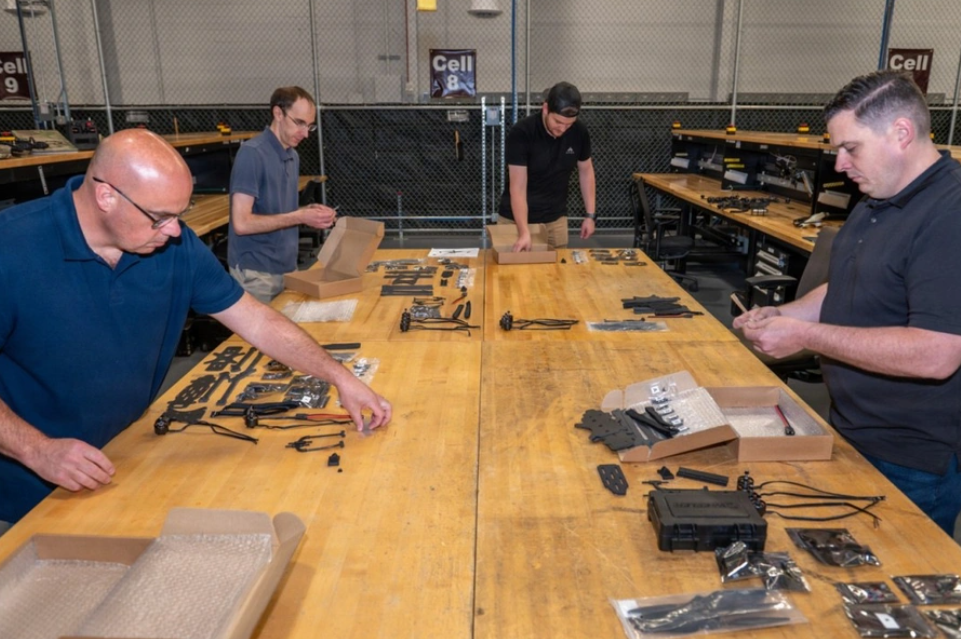
In a bold move to accelerate its unmanned aerial systems (UAS) capabilities, the U.S. Army has officially launched a 'manufacturing rodeo' aimed at rapidly developing small unmanned aerial systems (sUAS) by March 2027. This initiative, a key part of the Army's broader modernization strategy, seeks to harness innovative manufacturing techniques to produce cost-effective, high-performance sUAS that can be rapidly deployed in various operational contexts. With the increasing reliance on drone technology in modern warfare, this push is not just about speed; it’s about ensuring the Army remains competitive in an evolving battlefield landscape.
The focus on sUAS comes at a time when the demand for affordable mass solutions in defense is more critical than ever. As adversaries enhance their aerial capabilities, the U.S. military must be able to deploy a fleet of drones that are not only effective but also economically viable. The Army's rodeo aims to streamline production processes, allowing for a quicker turnaround from design to deployment. This approach is expected to lead to a significant reduction in costs, making it feasible to procure these systems in quantity without sacrificing quality or capability.
Furthermore, the Army’s initiative underscores a growing recognition of the importance of sustainment in defense procurement. By emphasizing rapid builds, the Army is not only looking to enhance its immediate operational capabilities but is also considering the long-term maintenance and lifecycle of these systems. The ability to produce drones quickly means that fleets can be refreshed and upgraded more frequently, reducing the risk of obsolescence and ensuring that troops are equipped with the latest technology.
Incorporating advanced manufacturing techniques, such as additive manufacturing and modular design, is also a cornerstone of this initiative. Such methods not only facilitate rapid production but also allow for easier repairs and upgrades, which are essential for maintaining operational readiness over time. This aligns well with the Army’s goals of ensuring that its equipment is not only affordable to procure but also economical to operate and sustain in the field.
As we look to the future, the success of the Army’s manufacturing rodeo could set a precedent for other branches of the military and defense sectors at large. If the Army can demonstrate that it can produce effective sUAS at scale and with efficiency, it could inspire a wave of innovation across the defense manufacturing landscape. This initiative comes at a pivotal moment when the global defense industry grapples with the dual challenges of technological advancement and budget constraints. The outcomes of this rodeo will likely influence how defense contracts are structured and how manufacturers approach the production of autonomous systems moving forward.
In conclusion, the Army’s focus on rapid sUAS production is a significant step towards achieving affordable mass in defense capabilities. As the initiative progresses, it will be crucial to monitor how these developments affect not only the Army’s operational readiness but also the broader defense ecosystem that relies on innovation, cost-efficiency, and sustainability. The implications are vast, and as the landscape evolves, so too will the strategies we employ to meet future challenges in defense and aerospace.