
ZPOD clears altitude testing at AFRL, advancing a dedicated-oil alternative to fuel-oil mix in small turbojets
Zulu Pods ran its ZPOD lubrication system on a 200-lbf-class turbojet at an Air Force Research Laboratory facility, with bearing temperatures at or below legacy systems and no bearing degradation found.
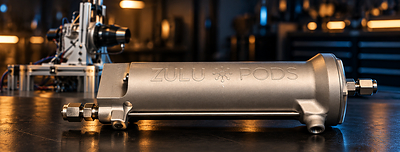
Zulu Pods has taken its ZPOD lubrication system through altitude testing at an Air Force Research Laboratory facility, running the system on a 200-pound-force-class turbojet built by an engine manufacturer. It is the first time ZPOD has been evaluated under representative altitude conditions at a government site.
The Coral Springs, Florida company said its engineers completed many test runs across a range of mission-relevant flight conditions. Bearing temperatures stayed comparable to, or lower than, those measured with legacy lubrication systems. The engine manufacturer then inspected the bearings and reported no signs of degradation.
The result gives Zulu Pods another data point as it works toward production, and it highlights how a small subsystem can shape the economics of low-cost military aircraft.
Why lubrication matters for small turbojets
Many small turbojets used in expendable and attritable aircraft lubricate their bearings with a fuel-oil mix. Oil is blended into the fuel, so part of what the aircraft carries serves as lubricant rather than propellant, and the airframe has to be sized around that.
ZPOD replaces the mix with a dedicated oil-delivery system. Once lubrication no longer depends on the fuel supply, designers can put more of the onboard fuel toward propulsion. Depending on the platform, that margin can go toward extra range, more payload, or a lighter, smaller system.
The company describes the production design as standardized and modular, intended for high-rate manufacturing and for commonality across several turbojet thrust classes. For engine makers, one lubrication architecture that carries across a product family could remove the need to design a new solution for each engine.
A second engine platform
The AFRL campaign also put ZPOD on a second manufacturer's engine. Earlier work consisted of ground testing on a partner's turbojet. Moving to a different engine, and from the ground to altitude, adds conditions that stress a lubrication system: temperature, air pressure and bearing loads all shift as an aircraft climbs and maneuvers.
Zulu Pods said the successful integration on multiple engines shows the architecture can be adapted from one platform to another. The work builds on U.S. Navy Office of Naval Research Phase 1 and Phase 2 SBIR programs, which funded early development and validation of the core technology.
Affordable mass, with reliability attached
The test lands as the Department of War pushes affordable mass initiatives to field large numbers of autonomous, expendable systems. That shift puts pressure on every component to be cheap enough to build in quantity, while still performing reliably on the missions these aircraft fly.
“Affordable does not mean cheap,” said Rob Sladen, CEO of Zulu Pods. “The Department of War demands robust, reliable performance delivered at the lowest possible cost. Our ZPOD technology is engineered to meet that exact mission need: delivering proven lubrication performance that extends platform capability while reducing lifecycle cost and system complexity.”
Next step: production
With results now spanning multiple engine platforms and representative flight conditions, Zulu Pods is advancing plans to scale operations for Low Rate Initial Production in fiscal 2027. The company also says it has begun receiving interest from allied nations within the AUKUS framework.
The challenge from here is manufacturing. Proving the system on a test stand is one milestone. Delivering it at the volume and price affordable mass programs require is the next.



