
X-Bow Nabs Rocket Motor Development Contract For Future Navy Missile
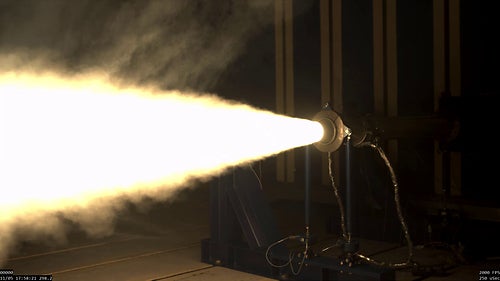
In a significant boost for the U.S. Navy's future missile capabilities, X-Bow Launch Systems has secured a contract for the development of a new rocket motor specifically designed for advanced missile systems. This development represents a strategic move towards enhancing the Navy's arsenal with affordable and effective solutions, particularly in a landscape where defense budgets are increasingly scrutinized. X-Bow's innovative approach aligns with the military's growing emphasis on attritable and autonomous systems, setting the stage for a new era of missile technology that aims to balance performance with cost-effectiveness.
The selection of X-Bow for this critical contract underscores the growing importance of low-cost systems in defense procurement. As the U.S. military faces a multitude of challenges, including evolving threats and the need for rapid deployment capabilities, the ability to produce advanced missile systems affordably becomes paramount. X-Bow's expertise in developing lightweight and efficient rocket motors is not only a testament to their technological prowess but also an indication of the Navy's commitment to investing in systems that can be produced in quantity without compromising on effectiveness.
In this context, the affordability of future missile systems is not just a financial consideration; it is a strategic imperative. The Navy's vision for future conflicts involves a diverse arsenal that can be deployed rapidly and in larger numbers, thus necessitating innovations in both design and manufacturing processes. By leveraging X-Bow's capabilities, the Navy is positioning itself to maintain a competitive edge while also ensuring that its fleet remains ready and sustainable in the face of emerging threats.
Moreover, X-Bow's contract aligns with broader trends in the defense industry where the focus is shifting toward sustainment as a critical component of operational readiness. As systems become more sophisticated, the challenge of keeping these technologies operational without excessive cost becomes increasingly vital. X-Bow's commitment to developing a rocket motor that emphasizes durability and low maintenance aligns with the Navy's goals of maximizing fleet readiness while minimizing lifecycle costs. This approach not only ensures that the Navy can maintain its operational capabilities but also allows for more resources to be allocated towards other critical areas.
As we look to the future, the implications of this contract extend beyond just missile technology. It signals a paradigm shift in how the defense industry approaches procurement, with an emphasis on affordability and sustainability. The collaboration between X-Bow and the Navy could set a precedent for future partnerships, encouraging other defense contractors to innovate in ways that prioritize cost-effectiveness without sacrificing performance. This is particularly relevant as global defense landscapes evolve and the demand for agile, responsive military capabilities increases.
In conclusion, the contract awarded to X-Bow for rocket motor development is not merely a financial transaction; it is a strategic move that reflects the Navy's commitment to achieving affordable mass in its future arsenal. As the defense sector continues to evolve, the focus on sustainable solutions will likely be a driving force behind future advancements, ensuring that the U.S. military remains prepared for the challenges of tomorrow.



