
Pentagon Plans $450 Million Buy For Drone Dominance’s ‘More Complex’ Phase 3 Competition
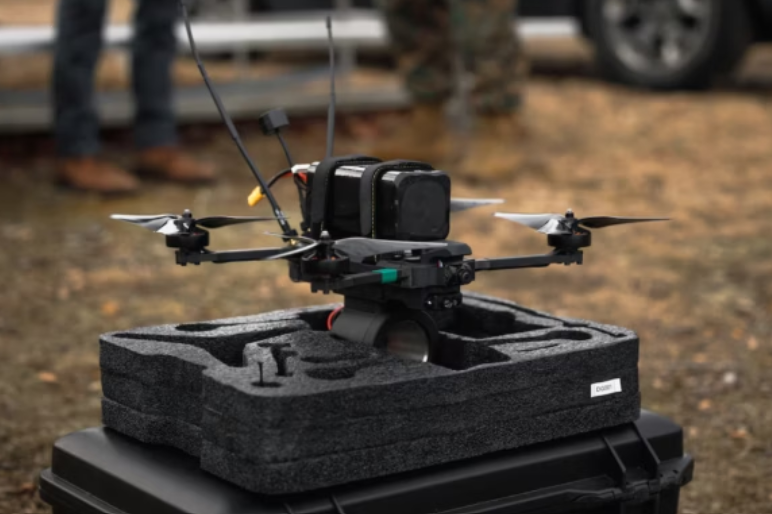
In a bold move to bolster its aerial capabilities, the Pentagon has announced plans for a $450 million procurement aimed at enhancing its drone dominance through a more intricate Phase 3 competition. This initiative signifies a pivotal shift in the U.S. military's approach to unmanned systems, emphasizing not only the need for superior technology but also the evolving complexities of modern warfare. As global threats diversify and the battlefield becomes increasingly multi-domain, the importance of effective drone integration into military operations cannot be overstated.
The Phase 3 competition marks a significant escalation in the Pentagon's ongoing effort to develop and refine unmanned systems that can adapt to a variety of operational scenarios. Historically, drone technology has been characterized by relatively straightforward mission profiles, such as surveillance and targeted strikes. However, with emerging threats including advanced missile systems and sophisticated electronic warfare tactics, the military recognizes that future drones must be equipped to operate in more complex environments. This necessitates innovative designs that blend artificial intelligence, advanced sensors, and robust communication systems, thereby enhancing situational awareness and mission effectiveness.
The $450 million investment is not merely a financial commitment; it reflects a broader strategy to fortify U.S. defense capabilities against adversaries who are rapidly advancing their own drone technologies. Countries like China and Russia have demonstrated an increasing proficiency in unmanned systems, which could potentially alter the balance of power in conflict scenarios. For defense contractors and investors, this presents both a challenge and an opportunity. Engaging in the Phase 3 competition could unlock significant contracts for companies capable of delivering cutting-edge solutions that meet the Pentagon's evolving requirements.
Moreover, as the Pentagon looks to integrate more advanced drones into its arsenal, the implications for the defense industry extend beyond just hardware. There is a growing emphasis on software capabilities, particularly in areas such as machine learning and data analytics, which are crucial for processing the vast amounts of information collected by drones. As a result, firms that specialize in these domains may find themselves well-positioned to contribute to the next generation of military drone systems.
As the defense community watches this development closely, it is clear that the future of aerial warfare will hinge on the ability to innovate rapidly. The Phase 3 competition is likely to spur technological advancements that will not only enhance military operations but also drive broader adoption of drone technology in commercial sectors. The interplay between defense needs and civilian applications could lead to groundbreaking advancements that redefine how drones are utilized across various industries.
In conclusion, the Pentagon's strategic investment in drone technology signals a recognition of the complex realities of modern warfare. For builders, investors, and industry professionals, this is a clarion call to engage with a rapidly evolving market that is poised to reshape the future of defense. As we move forward, collaboration between the military and private sector will be crucial in developing the sophisticated unmanned systems necessary to maintain superiority in an increasingly competitive global landscape.



