Navy greenlights low-rate production of drone refueler
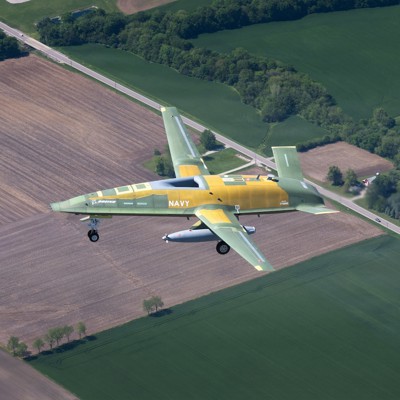
In a significant advancement for aerial refueling capabilities, the U.S. Navy has authorized low-rate production of its innovative drone refueler, the MQ-25 Stingray. This milestone not only underscores the Navy's commitment to modernizing its fleet but also highlights the growing role of unmanned systems in military operations. As defense budgets become increasingly scrutinized and the demand for operational efficiency rises, the MQ-25 represents a strategic pivot towards integrating advanced technologies into traditional military frameworks.
The MQ-25 Stingray, developed by Boeing, is designed to extend the range of carrier-based aircraft and enhance the Navy's operational reach. By enabling unmanned aerial vehicles to refuel manned aircraft in mid-flight, the Stingray promises to significantly reduce the logistical burden on carrier strike groups. This capability is essential, particularly in an era where naval engagements may occur at greater distances from land bases and require sustained air superiority.
This decision to greenlight low-rate production is particularly timely given the evolving geopolitical landscape. As near-peer adversaries enhance their military capabilities, the United States must adapt by leveraging cutting-edge technologies that offer a tactical advantage. The MQ-25 not only enhances the Navy's aerial refueling capabilities but also serves as a testbed for future unmanned systems that could operate in contested environments. The implications for future combat operations are profound, as the integration of drones into traditional air operations may redefine how naval forces project power.
Moreover, this initiative aligns with broader trends in the defense industry, where unmanned systems are increasingly seen as essential components of modern warfare. The transition from manned to unmanned platforms is not merely a technological shift; it signifies a fundamental change in operational philosophy. By investing in drone technology, the Navy is positioning itself to meet future challenges more effectively while optimizing costs and manpower.
As the production of the MQ-25 Stingray ramps up, industry stakeholders, investors, and defense contractors should pay close attention to its development and deployment. The success of this program could pave the way for further innovations in unmanned technologies across various military branches. Additionally, it may stimulate investments in related sectors, such as satellite communications and artificial intelligence, which are critical for enhancing the capabilities of unmanned systems.
Looking ahead, the Navy's commitment to the MQ-25 could signal a broader transformation within the military aviation landscape. As unmanned systems become more sophisticated and integrated into joint operations, we may witness a paradigm shift in how air power is conceptualized and executed. The Navy's decision to move forward with low-rate production of the Stingray not only marks a pivotal moment for the service but also sets the stage for a new era in defense technology that prioritizes innovation and strategic superiority.