
Navy Awards RTX $24.4 Billion Contract To Accelerate SM-6 Production
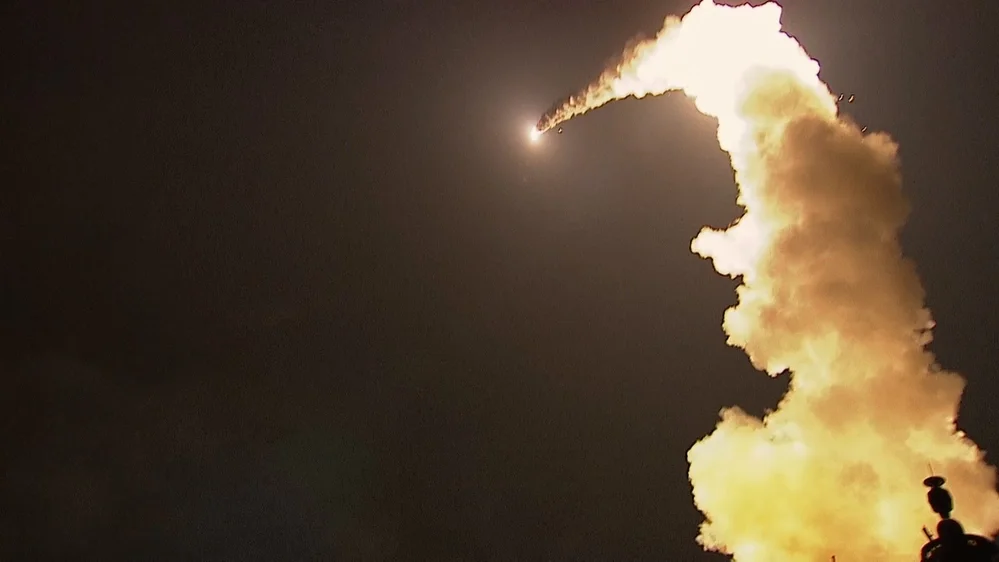
In a significant step towards enhancing maritime defense capabilities, the U.S. Navy has awarded Raytheon Technologies (RTX) a staggering $24.4 billion contract aimed at accelerating the production of the Standard Missile-6 (SM-6). This decision highlights the Navy's commitment to maintaining a technologically advanced fleet capable of countering emerging threats, particularly in an era where the balance of power is increasingly challenged. With this investment, the Navy is not just bolstering its arsenal but also signaling a shift towards affordable mass production of advanced weaponry, aligning with the industry's broader push for attritable systems that can be procured in larger quantities.
The SM-6 missile has proven its versatility, serving as both an air defense and anti-surface weapon. Its dual-role capability makes it invaluable in modern naval warfare, especially as adversaries develop more sophisticated aerial and maritime threats. The accelerated production not only aims to replenish existing inventories but also to ensure that the Navy can respond effectively to the evolving landscape of global security. This initiative is particularly relevant as the Department of Defense seeks to streamline procurement processes and increase readiness without compromising on quality, a challenge that the defense industry has grappled with for years.
The contract awarded to RTX is not merely an investment in a specific missile system; it embodies a broader strategy of sustainable defense procurement practices. By fostering a production environment that emphasizes efficiency and cost-effectiveness, the Navy can ensure that its fleets remain operationally ready while also managing budgetary constraints. The focus on accelerating SM-6 production aligns with the principles of affordable mass, allowing for the potential deployment of a larger number of systems that can be used in various operational scenarios without the burden of exorbitant costs.
As the defense landscape continues to evolve with the rise of peer competitors and asymmetric threats, the ability to procure advanced systems in bulk becomes a strategic imperative. The Navy's investment in the SM-6 production is a clear indication that the U.S. is committed to maintaining its technological edge through modernization and sustainment of its naval capabilities. Moreover, this contract serves as a potential model for future defense contracts, emphasizing the importance of scalable production techniques and the integration of new technologies into existing systems to maximize operational efficiency.
Looking ahead, the ramifications of this contract will extend beyond the immediate production timeline. With the successful ramp-up of SM-6 missiles, the Navy will not only enhance its combat readiness but will also set a precedent for how the defense community can approach future procurement strategies. As the industry collectively navigates the challenges of affordable mass production and sustainment, contracts like this one represent a promising step towards a more agile and responsive defense posture. As we move into an increasingly unpredictable global environment, the lessons learned from the SM-6 production acceleration will likely inform future endeavors in defense acquisition, ensuring that the U.S. remains prepared for any challenges that lie ahead.



