From Cold Call to Critical Care: Episode 92
In the rapidly evolving fields of military medicine and defense technology, the integration of innovative solutions can be a game-changer. As conflicts become more complex, the need for advanced medical capabilities in the field is more pressing than ever. The latest episode of the "Voices from DARPA" podcast, featuring Lt. Col. Adam Willis, M.D., U.S. Air Force, highlights the remarkable intersection of science, engineering, and medicine that could redefine battlefield care. Dr. Willis’s journey from physics student to a key innovator in military healthcare is testament to how diverse backgrounds can contribute to critical advancements in saving lives.
Dr. Willis's compelling story begins with a cold email that changed his life. Motivated by a demonstration of DARPA’s Revolutionizing Prosthetics program, he reached out to Col. Geoffrey Ling, a military doctor and mentor, who encouraged him to pursue his unique blend of interests. This pivotal moment set the stage for Dr. Willis to earn both a Ph.D. in theoretical and applied mechanics and a medical degree with a specialization in neurology. His experience exemplifies how interdisciplinary approaches can lead to breakthroughs in complex fields like military medicine, where understanding both the physical and biological sciences is essential.
During the podcast, Dr. Willis delves into some of the groundbreaking initiatives he is spearheading, such as the Golden Hour Evacuation (GOLDEVAC) program. This initiative aims to enhance the speed and efficiency of medical evacuation on the battlefield, ensuring that patients receive critical care as quickly as possible. The concept of the "Golden Hour"—the critical time frame within which trauma victims are most likely to survive if treated—highlights the urgency of Dr. Willis's work. By focusing on delivering care directly at the point of injury, GOLDEVAC seeks to minimize delays that can lead to preventable deaths.
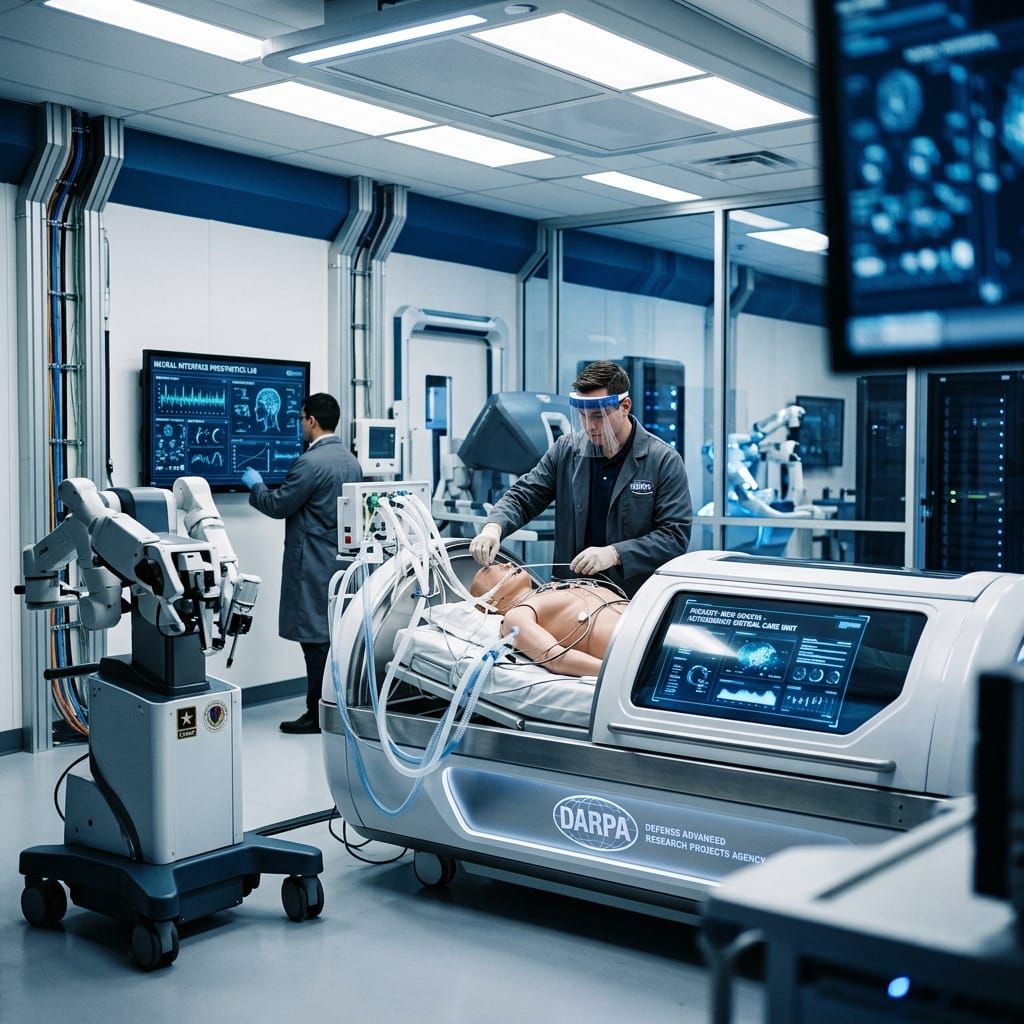
Another innovative program discussed in the episode is Making Anatomical Sense of Hemorrhage (MASH). This initiative is crucial for developing tools and techniques that can assist medics in managing severe trauma, particularly hemorrhaging, which is one of the leading causes of death on the battlefield. By equipping personnel with advanced capabilities that allow them to assess and respond to life-threatening injuries, MASH aims to empower first responders even in the most challenging environments. Dr. Willis's vision of an "ICU in a box" represents a significant leap forward in this area, proposing mobile medical solutions that can be deployed directly to the front lines.
Dr. Willis also emphasizes the importance of viewing medical challenges through the lens of physics and engineering, describing himself as a "Rosetta Stone" who translates complex medical issues into solvable problems. This perspective is critical as it fosters collaboration between medical professionals and engineers, leading to innovative solutions that can effectively address the unique challenges posed by battlefield medicine. The notion of autonomous surgical tools, for instance, could revolutionize care when human intervention is not immediately available, providing life-saving assistance when seconds count.
In summary, the insights shared by Dr. Adam Willis on the "Voices from DARPA" podcast underscore a pivotal moment in military medicine, where science and technology converge to save lives. As defense and aerospace professionals, understanding these developments is crucial not only for the advancement of military operations but also for the broader implications they hold for emergency medicine and trauma care in civilian contexts. The ongoing dialogue around such innovations is a vital component of our national security strategy, and it is essential for stakeholders in these industries to remain informed and engaged with these transformative ideas.