Duffey: F-47 “At the Cutting Edge of Technology” and Government, Industry Collaboration
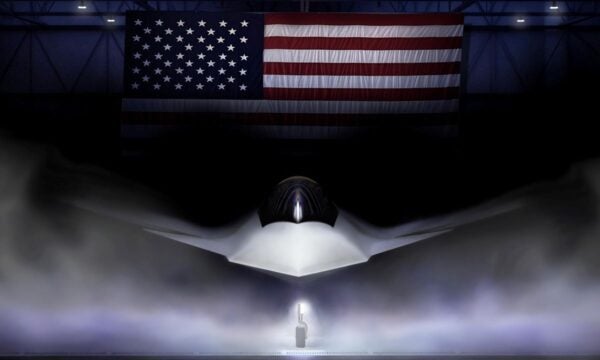
In a rapidly evolving global security landscape, the development of advanced military aircraft is not merely a matter of technological innovation but a testament to the intricate collaboration between government and industry. The recent remarks by Air Force Acquisition Executive Andrew Duffey regarding the F-47 program underscore the significance of this synergy. Duffey has positioned the F-47 as a pivotal advancement in military aviation, highlighting its status as 'at the cutting edge of technology.' This statement resonates deeply within the defense community, showcasing a commitment to not only modernize the fleet but also to strengthen the bonds between the public and private sectors.
The F-47 program is part of a broader initiative that reflects the Air Force's strategic vision of integrating advanced technologies to enhance operational capabilities. As global threats evolve, the need for aircraft that can adapt to new warfare paradigms becomes increasingly critical. The F-47 aims to incorporate innovative features such as artificial intelligence for combat decision-making, advanced sensor systems for enhanced situational awareness, and next-generation stealth capabilities. These elements are essential for ensuring that the U.S. maintains its technological edge against adversaries who are also investing heavily in military advancements.
What makes the F-47 particularly noteworthy is the emphasis on collaboration that Duffey has highlighted. This approach not only streamlines the development process but also ensures that the military's needs are effectively communicated to industry partners. By leveraging the expertise and agility of private sector companies, the Air Force can accelerate the timeline from concept to deployment. This model of cooperation is increasingly important in an era where traditional procurement processes often lead to delays and cost overruns. The F-47 serves as a case study in how a proactive partnership can yield results that benefit both defense capabilities and economic growth.
Furthermore, this collaboration extends beyond mere contractual agreements; it fosters an environment of innovation. The defense industry is often characterized by its high barriers to entry and complex regulatory frameworks, which can stifle creativity. However, initiatives like the F-47 encourage a culture where new ideas can flourish. Engaging startups and established tech companies alike not only diversifies the technological inputs but also brings fresh perspectives that can challenge conventional military thinking.
As we look ahead, the F-47 represents more than just a new aircraft; it symbolizes a transformative approach to defense procurement and military readiness. The success of this program could serve as a blueprint for future projects, potentially reshaping how the Department of Defense interacts with industry at large. For builders, investors, and defense industry professionals, the implications are profound. A successful F-47 rollout could stimulate investment in aerospace technologies, create jobs, and ultimately enhance national security.
In conclusion, the F-47 stands at a promising crossroads of technology and collaboration. As Duffey asserts its position at the cutting edge, the defense community must embrace this momentum to ensure that the innovations of today lay the groundwork for a safer tomorrow. The path forward is illuminated by the lessons learned in this program, suggesting that the future of military aviation will be defined not just by the machines we build, but by the partnerships we foster in the process.